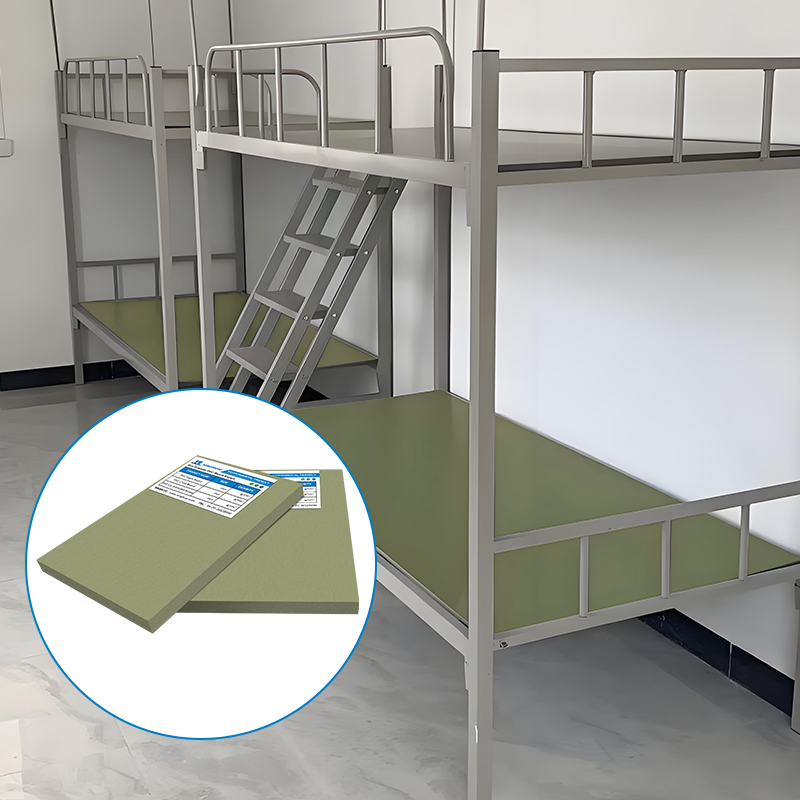
Recycling of Waste PVC Foam Boards: Feasibility, Process, and Current Market Situation
I. Recycling Feasibility: Dual Support from Policy Drivers and Market Demand
The recycling of waste PVC foam boards is highly feasible, driven by both mandatory environmental policies and growing market demand for recycled materials. According to industry statistics, the annual generation of waste PVC foam board materials has been steadily increasing in recent years, accounting for nearly 20% of the total sources of rigid PVC recycled materials, with the recycling rate showing a consistent upward trend.
At the policy level, the country has clearly set a target to achieve a 50% recycling rate for rigid plastics by 2025. Although the current recycling rate has not yet reached this benchmark, the strong growth momentum provides a clear development direction for the industry.
On the market demand side, the expansion of industries such as customized home furnishings, advertising display boards, and architectural decoration has directly driven up waste generation. For instance, in a major production base (without specifying the region), the annual waste generation exceeds tens of thousands of tons, which is efficiently recycled through specialized distribution centers. Moreover, the cost advantage of recycled materials is significant, with the cost of physical regeneration being much lower than other disposal methods, prompting enterprises to prioritize recycling, further boosting the recycling market.
II. Recycling Process: Full-chain Optimization from Pretreatment to Recycled Pellets
1. Pretreatment: Precise Sorting and Impurity Removal
Waste PVC foam board materials often contain foreign substances such as adhesive residue from tape, coating layers, and metal nails, necessitating multi-stage sorting for purification:
Manual Initial Sorting: Large foreign objects and non-PVC boards, such as wood pallet fragments and plastic films, are removed to lay the foundation for subsequent automated processing.
Vibrating Screening: Small-sized dust and debris are separated, which can be collected separately as fillers for reuse, enhancing resource utilization.
Magnetic Separation: Iron fasteners are removed to prevent screw wear and extend equipment life, reducing maintenance costs.
Near-Infrared (NIR) Spectroscopy Identification: PVC is accurately distinguished from other blended plastics with a sorting accuracy of over 99%, ensuring raw material purity. For example, by introducing NIR sorting technology, a company has significantly reduced the impurity content of raw materials, leading to a marked improvement in the performance stability of subsequent pelletized products.
2. Cleaning and Drying: Key Steps to Control Thermal Degradation
Cleaning: Warm water with a neutral surfactant is sprayed, combined with multi-stage counter-current rinsing, to avoid structural collapse of the foam due to high temperatures. For example, by optimizing the cleaning process, black pvc board a company has substantially increased the qualification rate of recycled materials.
Drying: Temperature and time are strictly controlled to prevent residual moisture from vaporizing during extrusion and forming pores, black pvc board which would affect product quality. The moisture content of the dried material needs to be controlled at an extremely low level to meet the requirements of subsequent pelletizing black pvc board.
3. Pelletizing: Twin-screw Extrusion and Performance Control
Equipment Selection: A new twin-screw vacuum venting extrusion system effectively controls thermal degradation through high torque and vacuum venting functions, producing recycled pellets that meet standards. In contrast, traditional single-screw equipment, with its high energy consumption and poor performance, black pvc board is gradually being phased out black pvc board.
Performance Indicators: Recycled pellets must meet key indicators such as density, Vicat softening point, and whiteness to adapt to different application scenarios black pvc board. For example, Grade A materials can be used for high-end furniture edge banding strips, black pvc board while Grade B materials are suitable for low-strength structural parts such as logistics pallets that have lower performance requirements black pvc board.
4. Application Orientation: Mainly in Mid-to-low-end Markets, with High-end Fields Yet to be Penetrated
Recycled materials are mainly used in mid-to-low-strength structural parts such as floor substrates, logistics pallets, and flower boxes. For example, black pvc board a company incorporates recycled PVC foam board materials into new materials in a certain proportion to produce outdoor floor substrates, which offer stable performance and lower costs. However, black pvc board high-end applications are still limited by performance shortcomings black pvc board. For instance, waste materials that have not undergone in-depth sorting and are extruded through single-screw machines result in recycled pellets with significantly reduced tensile strength and impact toughness, failing to meet the stringent material performance requirements of high-end fields black pvc board.
III. Current Market Situation: Dual Characteristics of Closed-loop Cooperation and Price Fluctuations
1. Closed-loop Cooperation: Upstream-downstream Collaboration to Improve Recycling Efficiency
In-house Recycling: Leading enterprises achieve resource closed-loops by establishing their own recycling systems. For example, a listed building materials company has set up designated recycling centers in multiple locations to exclusively collect waste materials from its own brand, with a significant recycling volume and a high reuse rate of recycled materials black pvc board.
Customized Cooperation: Whole-house customization manufacturers sign agreements with upstream suppliers to directly return factory-cut waste materials to the suppliers. For example, a company has established a "direct delivery line for board edge trimming waste" with a recycling factory, black pvc board enabling rapid return to the factory and recycled delivery, significantly increasing the use proportion of recycled materials and stabilizing product qualification rates.
2. Price Fluctuations: Component Purity and Logistics Costs Determine Value
Price Range: The average purchase prices in different distribution centers show some variations, but overall are significantly influenced by factors such as component purity and physical form. For example, PVC foam materials contaminated with PE or PS have a lower recycling price; while whole sheets, due to reduced energy consumption in crushing and dust control costs, command a higher premium than granulated materials.
Influencing Factors:
Component Purity: Impurity content is a key factor determining the recycling price. If harmful substances are detected to exceed standards, some compliant recycling plants will refuse to accept the materials, further compressing the market space for low-priced materials.
Physical Form: Whole sheets are easier to process automatically, reducing labor and energy costs, and are therefore more favored by recycling plants black pvc board .
Logistics Costs: Suppliers closer to recycling pelletizing plants can avoid intermediate warehousing fees, resulting in an actual settlement price increase at the plant by a corresponding margin, creating regional price differences.
IV. Challenges and Prospects: Dual Paths of Technological Upgrading and Policy Perfection
Despite significant progress in PVC foam board recycling, challenges such as an unmet recycling rate target and limited high-end applications remain. In the future, the industry needs to focus on two main directions black pvc board:
Technological Upgrading: Promote the use of infrared spectroscopy online identification and AI sorting systems to control impurity content at an extremely low level; develop high-performance recycled material modification technologies to meet the needs of high-end furniture and medical fields. For example, by adding specific additives or using co-blending modification methods, the mechanical properties and weather resistance of recycled materials can be improved black pvc board.
Policy Perfection: Implement relevant technical specifications and general rules, strengthen the "recycled material traceability code" system, and promote the construction of a unified national market. Through policy guidance and strengthened supervision, the recycling market order can be standardized and the overall industry level improved black pvc board.
Through technological breakthroughs and policy coordination, PVC foam board recycling is expected to transform from a model of "low recycling rate and high dispersion" to one of "high efficiency and large-scale operations," injecting new impetus into the circular economy.