
Key Technologies for Ensuring Uniformity of Colored Layers in PVC Colored Sheet Production
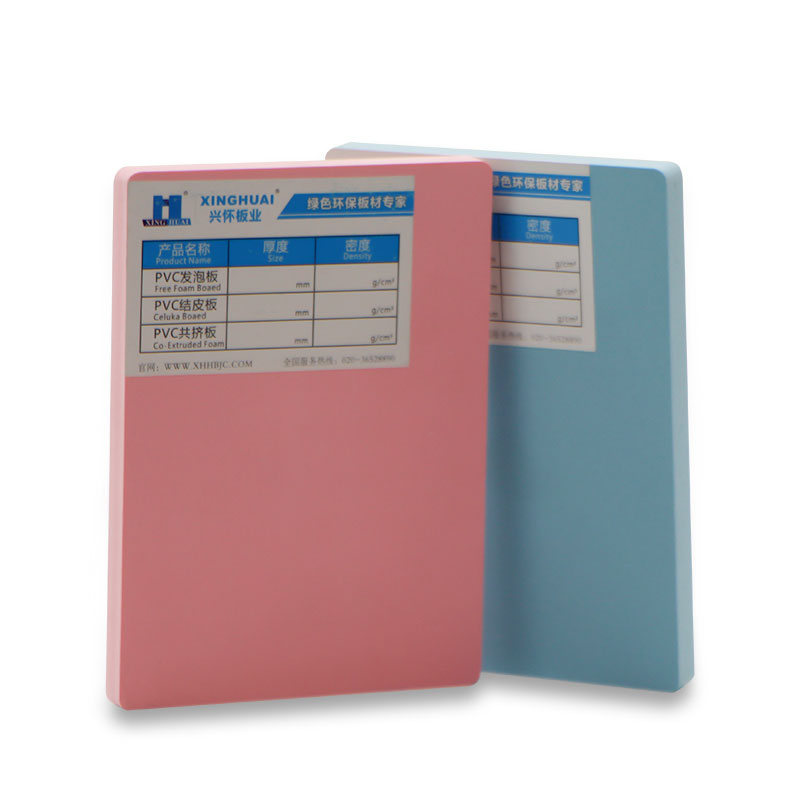
In the production of PVC colored sheets, the uniformity of the colored layer directly impacts the product's appearance quality and market competitiveness. Achieving a high degree of uniformity in the colored layer requires systematic management across multiple stages, including raw material selection, equipment optimization, process control, and quality inspection. Through the coordinated application of multi-dimensional technologies, consistent color distribution can be ensured.
1. Raw Material Selection and Pre-treatment: Laying the Foundation for Uniformity
1.1 Pigment Performance Matching
The particle size distribution, dispersibility, and compatibility of pigments with PVC resin are core factors determining uniformity.
Particle Size Control: Select pigments with particle sizes ranging from 0.2 to 2 μm to avoid coarse particles (>5 μm) that cause color spots or flow marks. For example, employing airflow pulverization technology to refine pigment particles to the sub-micron level enhances their dispersion efficiency in the resin.
Dispersibility Optimization: Reduce pigment surface energy through surface modification treatments (e.g., silane coupling agent coating) to minimize aggregation tendencies. Experiments show that modified pigments achieve 40% shorter dispersion times in PVC.
Compatibility Testing: For different formulations (e.g., rigid/soft PVC), verify the chemical stability of pigments with plasticizers and stabilizers to prevent migration or reactions that lead to color stratification.
1.2 Carrier Resin Selection
The melt flow rate (MFR) of the carrier resin must match that of the PVC matrix to enable synchronized melting.
Rigid PVC Systems: Use carrier resins with an MFR of 8–12 g/10 min to ensure simultaneous plasticization with PVC (MFR 5–8 g/10 min) in the extruder.
Soft PVC Systems: Adopt carrier resins with an MFR of 15–20 g/10 min to compensate for the viscosity reduction caused by plasticizers, preventing uneven pigment dispersion.
2. Equipment Optimization: Creating a Homogeneous Mixing Environment
2.1 Mixing Equipment Upgrades
High-Speed Mixers: Equip with dual-layer paddle structures that generate strong turbulence through counter-rotation, achieving initial pigment-resin uniformity pvc foam board sizes within 30 seconds. For instance, increasing mixing speed to 1,200 rpm via frequency control significantly reduces mixing dead zones.
Twin-Screw Extruders: Select screws with a length-to-diameter ratio (L/D) ≥40:1 to extend the pigment dispersion time by increasing the melting zone length. Experimental data indicates that raising the L/D from 32:1 to 40:1 reduces color uniformity (ΔE) from 1.8 to 1.2 pvc foam board sizes.
Dynamic Mixers: Install static mixers before the die head to perform secondary shear on the melt using internal helical elements, eliminating residual pigment aggregates.
2.2 Precise Temperature Field Control
Segmented Temperature Control: Divide the extruder into feeding (120–140°C), compression (160–180°C), and metering (170–190°C) zones to prevent local overheating that causes pigment degradation or insufficient dispersion pvc foam board sizes.
Balanced Die Head Temperature: Use infrared thermometers to monitor temperature uniformly across die head zones, maintaining a温差 ≤5°C to avoid melt flow variations due to temperature gradients.
3. Process Parameter Optimization: Achieving Dynamic Equilibrium
3.1 Screw Speed and Backpressure Synergy
Screw Speed Adjustment: Tailor speed based on pigment type—e.g., higher speeds (400–500 rpm) for inorganic pigments (e.g., titanium dioxide) to overcome high density, and lower speeds (300–400 rpm) for organic pigments (e.g., phthalocyanine blue) to prevent shear-induced overheating pvc foam board sizes.
Backpressure Control: Maintain backpressure at 8–12 MPa to ensure adequate melt compaction and prevent uneven pigment distribution due to pressure fluctuations.
3.2 Residence Time Management
Melting Residence Time: Adjust screw speed and feed rate to keep pigment residence time in the extruder at 90–120 seconds, ensuring full dispersion without degradation pvc foam board sizes.
Cooling Residence Time: Optimize roller gaps and line speed in the three-roll calender to maintain the colored layer in a uniform melt state before cooling and solidification, avoiding internal stress-induced color deviations from rapid cooling.
4. Online Inspection and Feedback Control
4.1 Real-Time Color Monitoring
Spectrophotometers: Install online color measurement systems at the die head exit to collect color data every 5 seconds, monitoring uniformity via ΔE values. The system automatically triggers process parameter adjustments when ΔE exceeds 1.5 pvc foam board sizes.
Machine Vision Inspection: Use high-speed cameras to capture the colored layer surface and apply image processing algorithms to detect defects like color spots or flow marks, localizing uneven areas for feedback to the control system.
4.2 Closed-Loop Feedback Regulation
Adaptive Control Algorithms: Build pigment dispersion pvc foam board sizes models based on historical data to enable automatic adjustments of screw speed, temperature, or feed rate when color deviations are detected. For example, one production line improved color pass rates from 92% to 98% using this technology.
Early Warning Mechanisms: Set color uniformity pvc foam board sizes thresholds to trigger production halts for inspection after three consecutive out-of-spec readings, preventing batch defects.
5. Quality Traceability and Continuous Improvement
5.1 Batch Management Systems
Raw Material Traceability: Assign unique pvc foam board sizes codes to each batch of pigments and resins, recording key parameters like particle size and dispersibility for defect溯源 (traceability).
Process Parameter Archiving: Automatically save temperature, speed, and pressure data for each batch to create a traceable pvc foam board sizes process database.
5.2 Continuous Optimization Mechanisms
DOE Experimental Design: Conduct multi-factor experiments (e.g., pigment particle size × screw speed × temperature) periodically to pvc foam board sizes optimize process windows. For instance, reducing pigment particle size from 1.5 μm to 0.8 μm improved color uniformity by 30% in experiments.
Supplier Collaboration: Share production data with pigment suppliers to jointly develop customized pigment products, addressing uniformity challenges at the source.
Conclusion
Ensuring uniformity in the colored layer of PVC sheets is a complex systems engineering challenge spanning material science, fluid mechanics, and automation control. By refining raw material selection, upgrading equipment intelligence, dynamically optimizing process parameters, and implementing closed-loop online inspection, significant improvements in color uniformity can be achieved. Looking ahead, the integration of nanoscale pigments, artificial intelligence algorithms, and other advanced technologies will propel colored layer uniformity control toward higher precision, providing technical support for manufacturing premium PVC products pvc foam board sizes.
