
Color Addition Methods for PVC Colored Sheets
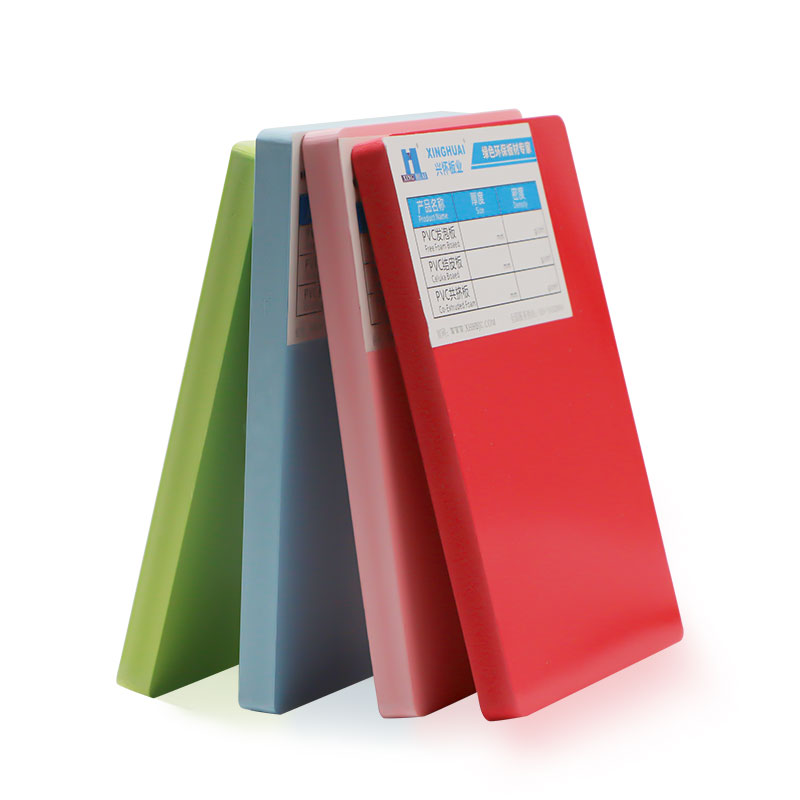
Polyvinyl chloride (PVC), a widely used thermoplastic material, achieves its vibrant hues in colored sheets through three primary technical approaches: pigment powder coloring, masterbatch coloring, and compounding coloring. Each method integrates pigment dispersion principles with advanced processing technologies to deliver precise color control pvc celuka board.
1. Pigment Powder Coloring: Flexible and Cost-Effective Traditional Process
This method directly mixes pigment powders with PVC resin through high-speed mixers, combining pigments with additives like plasticizers and stabilizers. For instance, producing red PVC sheets involves organic pigments such as phthalocyanine red or pvc celuka board toluidine red, achieving initial dispersion via mechanical shear forces.
Technical Advantages:
Low cost: Eliminates pre-processing steps, ideal for small-batch customization.
Flexible color adjustment: Rapid pigment ratio modifications enable subtle hue adjustments (e.g., adding 0.1–0.5% fluorescent whitening agents pvc celuka board enhances white sheet gloss).
Simplified workflow: Reduces production cycles by skipping carrier resin melting.
Technical Challenges:
Dispersion control: Pigment agglomeration requires intense shear from twin-screw extruders for nanoscale dispersion.
Dust pollution: Mixing generates airborne particles, pvc celuka board necessitating negative-pressure collection systems.
Batch consistency: Manual weighing errors may cause color deviations, demanding strict color difference management (ΔE ≤ 1.5).
2. Masterbatch Coloring: Efficient and Stable Modern Solution
Masterbatch technology pre-disperses pigments, pvc celuka board carrier resins (e.g., LDPE), and dispersants at 180–220°C to create high-concentration pigment concentrates. Mixed with PVC resin at 3–8% ratios, the masterbatch melts during extrusion to transfer color uniformly. For example, phthalocyanine blue masterbatch ensures >98% color uniformity in blue PVC sheets.
Technical Advantages:
Superior dispersion: Pigment particles are pre-refined to 0.5–2 μm diameters.
Eco-friendly: Closed-loop mixing eliminates dust, pvc celuka board complying with ROHS standards.
Functional integration: Simultaneously incorporates UV stabilizers (e.g., benzotriazoles) or antimicrobial agents for dual performance enhancement.
Technological Breakthroughs:
Carrier resin optimization: Specialized carriers for rigid (Shore hardness 85–95) and soft PVC (30–50 phr plasticizer) prevent compatibility issues pvc celuka board.
Migration resistance: Surface coating technologies reduce pigment solubility in plasticizers, addressing color bleeding in soft PVC.
Smart color matching: Spectrophotometers and computerized color matching (CCM) systems cut development time from 4 hours to 30 minutes pvc celuka board.
3. Compounding Coloring: Ultimate Uniformity Through Molecular-Level Mixing
Compounding integrates pigment dispersion and PVC resin melting in twin-stage extruders. Two-stage screw designs (compression ratio 3:1–4:1) achieve molecular-level mixing, such as precisely controlling carbon black (15–25 nm) and rutile titanium dioxide pvc celuka board (0.2–0.3 μm) ratios for gray PVC sheets with ΔE ≤ 1.0.
Technical Advantages:
Color consistency: 99.5% internal pigment uniformity eliminates flow marks and weld lines.
Streamlined workflow: Skips intermediate mixing, pvc celuka board reducing production cycles by >30%.
Performance preservation: Optimized processing temperatures (160–180°C) and shear rates (≤500 s⁻¹) minimize resin degradation.
Application Limitations:
Minimum order quantity: Requires ≥500 kg per batch, pvc celuka board unsuitable for small-scale production.
Higher costs: Compounding fees add 15–20% to material costs, necessitating economies of scale.
Reduced flexibility: Color adjustments demand re-compounding, extending lead times to 7–10 days.
4. Technology Selection Matrix
| Evaluation Criteria | Pigment Powder | Masterbatch | Compounding |
|---|---|---|---|
| Cost Sensitivity | ★★★★★ | ★★★☆☆ | ★★☆☆☆ |
| Color Precision | ★★★☆☆ | ★★★★☆ | ★★★★★ |
| Production Scale | Small (<1 ton) | Medium (1–10 tons) | Large (>10 tons) |
| Environmental Compliance | ★★☆☆☆ | ★★★★☆ | ★★★★★ |
| Functional Requirements | Basic coloring | UV/antimicrobial | Ultimate uniformity |
5. Industry Trends
Three key trends are reshaping PVC sheet coloring:
Digital color matching: AI-driven pigment optimization reduces trial iterations from 5–8 to 2–3.
Nanopigments: Sub-100 nm particles enhance color saturation while cutting pigment use by 15–20%.
Sustainable processes: Water-based pigment slurries replace organic solvents, reducing VOC emissions by >90%.
Conclusion: PVC sheet coloring has evolved from empirical methods to data-driven precision control. Manufacturers must align technology choices—pigment powder, masterbatch, or compounding—with product positioning, scale, and sustainability goals while exploring nanomaterials and smart coloring for competitive differentiation.
