
Different Densities of PVC Co-extruded Boards: Between Light and Heavy Lies a Completely Different Destiny
They are all called PVC co-extruded boards, but the density ranges from 0.45 to 0.8 kilograms per cubic meter — a span of nearly double. To outsiders, pvc room divider it's just a difference of "a little lighter" or "a little heavier." But insiders know clearly — pvc room divider behind this lie two completely different application logics, performance profiles, and cost calculations.
Density is the true "identity card" of a PVC co-extruded board.
1. First, Get This Straight: What Does Density Actually Control?
The density of a PVC co-extruded board pvc room divider essentially reflects the degree of internal foaming. The lower the density, the more fully foamed the board is, with more micro-cells inside; the higher the density, the more restrained the foaming, and the denser the board body.
This difference in "foaming ratio" directly affects four pvc room divider lifelines:
Weight. A board with a density of 0.45 may weigh only two or three kilograms per square meter; a board with a density of 0.8 weighs double at the same dimensions pvc room divider. Handling, hoisting, and transportation make a world of difference.
Hardness. The higher the density, the harder the surface — a fingernail scratch leaves no mark; the lower the density, the surface is softer, with a slight bounce when pressed firmly pvc room divider.
Rigidity. High-density boards have strong bending resistance and are less prone to sagging over large spans; low-density boards lack rigidity and require denser support beyond a certain span.
Processability. Low-density boards cut easily and carve smoothly, but edges tend to fray; high-density boards offer more resistance during processing, but cuts are clean and sharp, and ink absorption for printing is even pvc room divider.
In one sentence: Get the density wrong, and either you can't install it or it won't last.
2. Low Density (0.45–0.55 kg/m³): The "Efficiency Expert" Traveling Light
PVC co-extruded boards in this range are highly foamed and feather-light — the "ceiling-level" choice for the advertising industry and lightweight decoration pvc room divider.
Core advantage: Ultimate lightweight.
A 2440×1220 mm, 5 mm thick co-extruded board with a density of 0.45 weighs less than 4 kilograms. One person can carry it with one hand. Loading, mounting on walls, cutting — all effortless. For signage, light boxes, and wayfinding systems that need frequent image changes, this lightness is pure efficiency pvc room divider.
Core scenarios: Advertising display and lightweight decoration.
Computer-cut lettering, UV printing, screen printing, light box panels, exhibition board backdrops — these applications demand boards that "look refined, mount easily, and swap quickly." Low-density co-extruded boards have a smooth, dense surface pvc room divider. After inkjet printing, colors are saturated and not dull, and cut edges are clean and sharp — perfectly matching these needs.
But watch out: The shortcomings of low-density boards are also obvious. Because the board body is relatively soft, screw fixation points are prone to chipping. Large-area installation must be paired with a keel frame — it cannot be mounted directly to the wall. Also, when density is too low, the risk of rough cut edges and uneven ink absorption during printing increases, placing very high demands on the manufacturer's formula tuning and cooling/setting process pvc room divider.
Applicable density: 0.45–0.55 kg/m³
Typical thickness: 3–8 mm
Keywords: Lightweight, easy to process, advertising first choice
3. Medium Density (0.55–0.65 kg/m³): The "All-Rounder" with Balanced Offense and Defense
This is the most widely used density range for PVC co-extruded boards, and the "sweet spot" most people choose without a second thought pvc room divider.
Core advantage: A balance of rigidity and flexibility.
At a density of around 0.6, the foaming ratio is moderate. It retains the smooth, hard surface layer of unfoamed PVC resin on the co-extruded surface, while giving the core layer enough rigid support. A medium-density co-extruded board with a thickness of 8 mm or more will show no obvious scratch marks in a fingernail scratch test — this hardness is already sufficient for the vast majority of indoor and outdoor decoration scenarios pvc room divider.
Core scenarios: Architectural decoration and home applications.
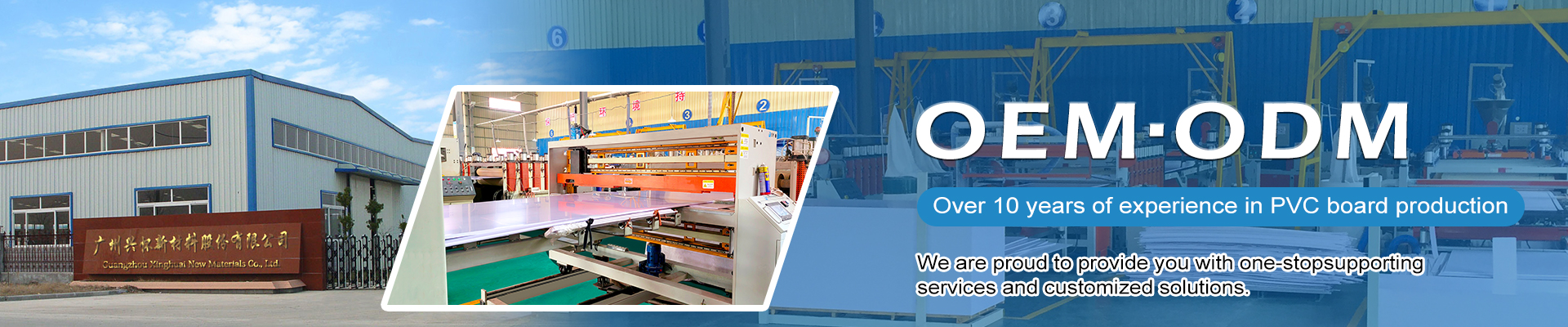
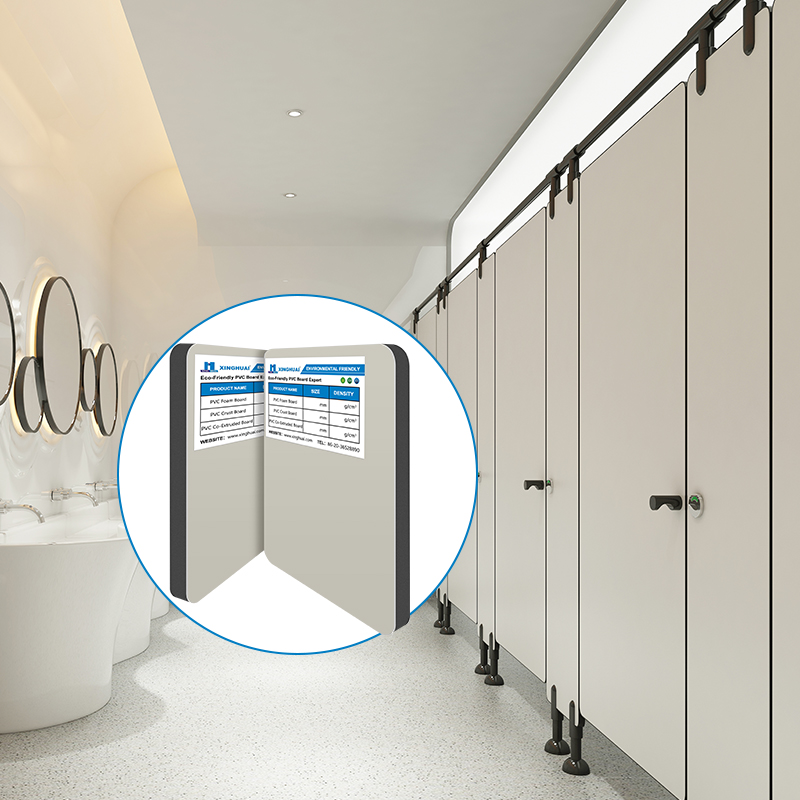
Bathroom partitions, cabinet doors, ceiling panels, wall decorative boards, screen back panels — these scenarios demand boards that "can take a beating, look good, and last long." Medium-density co-extruded boards fit the bill perfectly: surface hardness is sufficient to withstand daily knocks; density distribution is even, so deformation is unlikely; fire rating can reach B1 level, self-extinguishing the moment the fire source is removed pvc room divider.
In special industrial scenarios such as pig farm ceilings, 20 mm thick medium-density PVC co-extruded boards are core equipment — the inner high-density foam provides thermal insulation, the outer flame-retardant PVC surface provides fire protection, with a thermal conductivity of only 0.038 watts per meter-kelvin. The winter condensation rate can be controlled within 5%, far superior to traditional color-coated steel materials pvc room divider.
Applicable density: 0.55–0.65 kg/m³
Typical thickness: 5–20 mm
Keywords: All-rounder, king of cost-performance, decoration mainstay
4. High Density (0.65–0.8 kg/m³): The "Powerhouse" Built for Heavy Loads
When density approaches 0.8, the PVC co-extruded board is no longer a "lightweight panel" — it is a structural material with performance close to solid wood pvc room divider.
Core advantage: Double domination of hardness and strength.
The surface hardness of high-density co-extruded boards approaches that of skin foam boards, and in some indicators even surpasses them. A 10 mm thick high-density PVC board can bear up to 50 kilograms per square meter and can have heavy objects like ceramic samples glued directly to it without deformation. The unfoamed PVC resin layer on the surface gives it a mirror-like smooth texture. After UV printing, colors "hold up" — dark blue metallic gradients, sharp edges of white logos — printed without dullness or smudging pvc room divider.
Core scenarios: Load-bearing structures and high-end displays.
Bus floors, train carriage ceilings, vehicle body core layers, cold storage wall panels, chemical anti-corrosion projects — these scenarios demand boards that "can bear heavy loads, resist corrosion, and span large distances." High-density co-extruded boards have a tensile strength of up to 28 megapascals, 30% higher than ordinary PVC boards, and can support seamless spans of over 12 meters pvc room divider.
In high-end commercial displays, the storefront signage of automotive flagship stores often uses 2400×1200 mm specifications. These large-size, high-flatness display boards made from high-density co-extruded boards can have a base flatness tolerance controlled within 0.3 millimeters per square meter. After inkjet printing, details remain crystal clear even in sunlight.
But the cost is also direct: Weight doubles, transportation costs rise; processing difficulty increases, requiring higher-power engraving equipment; and the purchase price also goes up accordingly pvc room divider.
Applicable density: 0.65–0.8 kg/m³
Typical thickness: 8–30 mm
Keywords: Load-bearing, high-end, industrial grade
5. A "Density-to-Scenario" Quick Reference Logic
Choosing a density is essentially answering one question: Is this board meant to be "looked at" or meant to "carry weight"?
Meant to be "looked at" — advertising signage, light boxes, screen-printed graphics, short-term displays — choose low density, 0.45 to 0.55. Lightweight, easy to process, affordable to replace and swap pvc room divider.
Needs to both "look good" and "carry weight" — interior decoration, home bathrooms, ceiling partitions — choose medium density, 0.55 to 0.65. Balanced performance, optimal cost-effectiveness pvc room divider.
Mainly meant to "carry weight" — load-bearing structures, industrial anti-corrosion, high-end commercial displays — choose high density, 0.65 to 0.8. Maximum hardness, maximum lifespan pvc room divider.
For boards of the same density, the thicker the board, the higher the surface hardness. So for boards under 8 mm, a density of at least 0.55 is recommended; for thick boards over 20 mm, even a density of 0.45 can achieve good surface hardness.
Final Thoughts
The density of a PVC co-extruded board is not a cold number — it is a precise application dividing line.
0.45 is the advertiser's agility, 0.60 is the decorator's composure, 0.80 is the engineer's confidence. Choose the right density, and the board becomes the most handy tool in your hand. Choose wrong, and even the best material is just excess weight and wasted budget.
Remember: It's not that lighter is always better, nor that heavier is always stronger — the density that matches the scenario is the best density.
