
PVC Skin Foam Board: The "Ultimate Choice" for Humid Environments
When the rainy season arrives quietly, wooden wardrobes begin to mold and swell, walls start to peel and flake, and cabinet doors begin to warp and curve — all of this is the ruthless verdict that humid environments pass on traditional materials.
But there is one type of board that, no matter how fiercely moisture rages, remains unshaken and spotless as ever. It is the PVC skin foam board expanded pvc foam.
The answer is clear: PVC skin foam board is not only suitable for humid environments — it was born for them.
1. "Afraid of Water" by Nature? No, "Destined to Conquer Water"
The moisture resistance of PVC skin foam board is not a function added later — it is a gene it was born with.
The molecular structure of PVC (polyvinyl chloride) material itself is extremely dense. Water molecules simply cannot easily penetrate through to the interior of the material. Its water absorption rate is extremely low, as low as 0.1% — which means even if the board is soaked in water for a long time, it will barely absorb any water and swell. When water contacts the board surface, it is not absorbed and spread out, but instead forms beads that slide right off. A wipe with a cloth and it is clean.
This stands in sharp contrast to wooden materials. Wood absorbs moisture, swells, molds, and rots in humid environments, while PVC skin foam board under the same conditions does not absorb water, does not mold, does not deform, and does not deteriorate expanded pvc foam.
Even more critically, the surface of PVC skin foam board is formed into a dense, smooth skin layer through high-temperature calendering, further sealing off every channel for moisture invasion. This dual structure of "skin on the outside, foam cells on the inside" makes it one of the most reliable barriers in humid environments expanded pvc foam.
2. Not Just Moisture-Proof, But a Complete "Anti-Humidity System"
The performance of PVC skin foam board in humid environments goes far beyond simply "not fearing water." It has built a complete anti-humidity system expanded pvc foam:
Anti-mold and antibacterial. The PVC material itself does not easily breed mold and bacteria. In high-humidity areas such as bathrooms and kitchens, it effectively reduces the risk of mold growth and keeps the space clean and hygienic.
Resistant to acid and alkali corrosion. Humid environments often come with chemical erosion, and PVC skin foam board can resist corrosion from acids, alkalis, salts, and other chemical substances. It will not be damaged by chemical reactions in humid environments. This is especially important in special places such as chemical plant workshops, food processing workshops, and swimming pools expanded pvc foam.
Flame-retardant and self-extinguishing. The safety hazards of electrical wiring in humid environments cannot be ignored. PVC skin foam board is flame-retardant — it goes out the moment the fire source is removed — and can effectively contain the spread of fire in its early stages, adding another layer of safety in humid conditions expanded pvc foam.
Thermal insulation. The uniform micro-cell foam structure inside the board gives it excellent thermal insulation performance. In humid environments with large temperature differences, it can effectively block heat exchange and reduce condensation.
3. Which Humid Scenes Are Its Home Turf?
Bathrooms. Long-term exposure to water vapor, PVC skin foam board prevents mold growth and keeps things clean and hygienic. Whether for wall decoration or ceilings, it can handle the job. Some products also feature a lamination process, making the surface even smoother and the moisture resistance even stronger.
Kitchens. Lots of oil fumes and high humidity, PVC skin foam board is easy to clean, waterproof, and resistant to deformation. When used for cabinet doors, be sure to choose a product with a higher skin hardness to ensure that screw fixation points do not chip or break under stress.
Basements. Basements are one of the areas in a building most prone to dampness and water seepage. The excellent waterproof performance of PVC skin foam board can effectively resist groundwater penetration. Installed on walls and floors, it keeps the basement dry and stable expanded pvc foam.
Balconies and Outdoors. It can withstand wind and rain, and will not deform or corrode due to humidity changes. When made with weather-resistant formulations, the color can remain unchanged for a long time without aging expanded pvc foam.
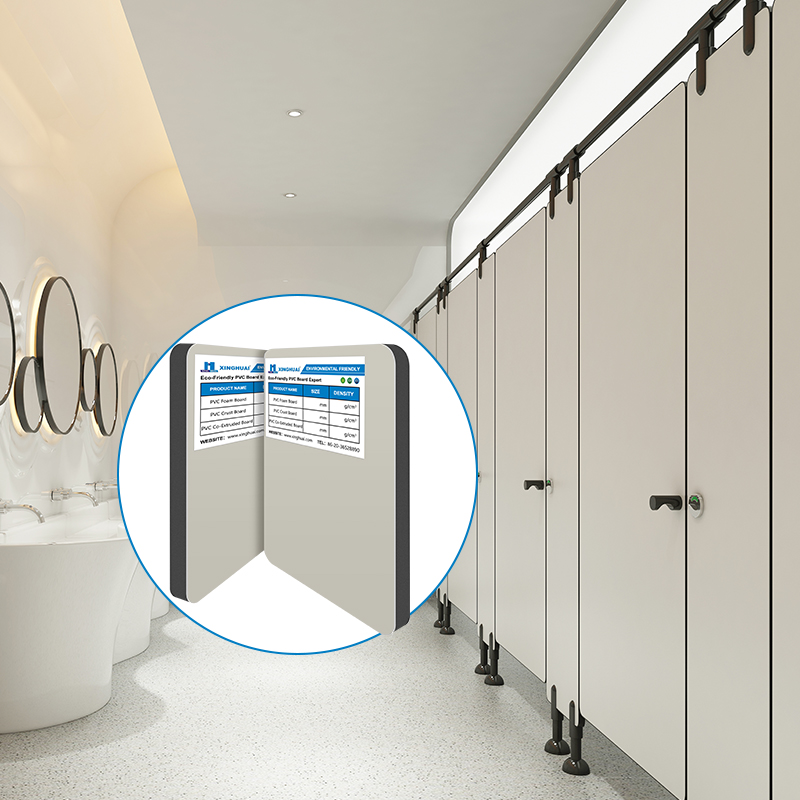
Commercial and Industrial Spaces. Mall restrooms, food areas, hospital operating rooms, laboratories, underground garages, chemical plant workshops, swimming pools… Wherever there are requirements for moisture resistance, anti-mold, and easy cleaning, PVC skin foam board can deliver outstanding performance.
4. Points to Note in Use: Even Good Materials Must Be Used Right
Although PVC skin foam board performs excellently in humid environments, to get the most out of it, a few things must be kept in mind expanded pvc foam:
First, choose the right product. When used for cabinet doors, be sure to choose a skin foam board with a high-hardness skin layer and fully foamed core. Ordinary foam boards are waterproof, but the material is relatively soft, and screw fixation points are prone to chipping. You can measure surface hardness with a durometer and refer to the abrasion resistance test data provided by the manufacturer to make your selection expanded pvc foam.
Second, seal properly. Use waterproof sealant at the joints to prevent moisture from seeping through the gaps into the internal structure. When installing ceilings, leave ventilation openings to avoid moisture buildup expanded pvc foam.
Third, install correctly. For indoor wall decoration, first prepare the base surface to ensure it is flat and dry. Use specialized PVC adhesive to bond, starting from one end and gradually laying the panels, tapping gently with a rubber mallet to ensure tight contact and avoid air bubbles. For outdoor installation, choose stainless steel or other corrosion-resistant materials for hangers, and set spacing according to local wind pressure conditions expanded pvc foam.
Fourth, maintain regularly. Wipe with a neutral cleaner and a soft cloth, and avoid strong acid or alkali cleaners. Install exhaust fans to reduce the continuous impact of the humid environment on the boards, and regularly check the surface expanded pvc foam cleanliness and any damage, repairing promptly.
Final Thoughts
PVC skin foam board in humid environments is not "barely usable" — it is "naturally matched."
It does not absorb water, does not mold, does not deform, resists corrosion, is flame-retardant and self-extinguishing — every single characteristic expanded pvc foam precisely hits the pain points of humid environments. From home kitchens and bathrooms, to commercial food areas and swimming pools, to industrial chemical workshops and cold storage, it has proven its value with near-perfect moisture resistance.
When wood rots in humidity, when metal expanded pvc foam rusts in water vapor, PVC skin foam board remains spotless and as tough as ever.
When choosing materials for humid environments, PVC skin foam board is not an alternative — it is the first choice.
