
Understanding PVC Foam Boards: A Broad Overview
PVC foam boards, also known as PVC board foam or PVC insulation board, are engineered materials derived from polyvinyl chloride (PVC) resin. By incorporating foaming agents and stabilizers during the manufacturing process, these boards achieve a cellular structure that reduces weight while maintaining structural integrity. The resulting material exhibits excellent insulation properties, making it ideal for thermal and acoustic insulation applications. Additionally, PVC foam boards are resistant to moisture, chemicals, and fire, further enhancing their versatility.
The Usual Density Range of PVC Foam Boards
The density of PVC foam boards varies significantly depending on their intended use and manufacturing process. Generally, the density range falls between 0.5 g/cm³ and 0.6 g/cm³ for standard PVC foam boards. However, this range can be broader when considering specialized variants like hard PVC board or expandable PVC.
Standard PVC Foam Boards (0.5–0.6 g/cm³)
These boards are the most common type, offering a balance between lightweight properties and mechanical strength. They are widely used in construction for wall cladding, ceiling panels, and partition walls due to their ease of installation and cost-effectiveness. Their moderate density also makes them suitable for PVC foam board for advertising, where lightweight panels are required for easy handling and transportation during exhibitions or outdoor events.Hard PVC Board (0.6–0.65 g/cm³)
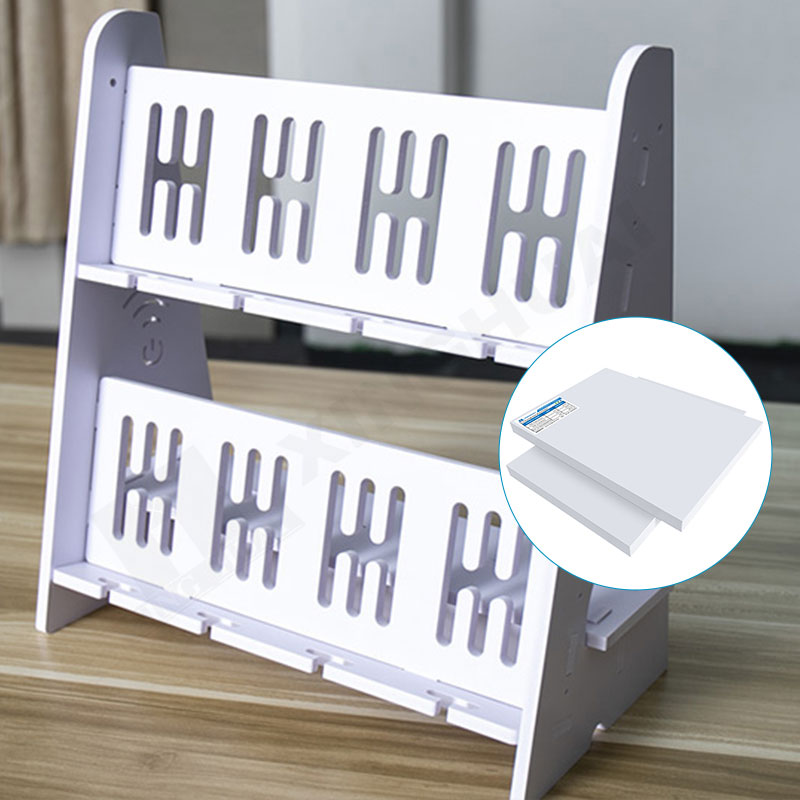
Hard PVC boards, with a slightly higher density, are designed for applications requiring greater rigidity and impact resistance. These boards are often used in furniture manufacturing, such as cabinets, shelves, and decorative panels, where durability is paramount. Their increased density enhances their load-bearing capacity, making them ideal for structural components in both residential and commercial settings.Expandable PVC (0.4–0.5 g/cm³)
Expandable PVC, also known as low-density PVC foam, is characterized by its highly porous structure. This variant achieves a lower density range by incorporating more foaming agents during production, resulting in a material that is exceptionally lightweight and flexible. Expandable PVC is commonly used in packaging, protective casing for electronic devices, and even as a core material in composite structures where weight reduction is criticalhard pvc board .
Why Density Matters in PVC Foam Boards
The density of PVC foam boards directly influences their performance in various applications:
Mechanical Strength: Higher-density boards exhibit greater tensile and compressive strength, making them suitable for load-bearing applications. Conversely, lower-density boards are more flexible and easier to shape, ideal for decorative or non-structural uses hard pvc board.
Thermal and Acoustic Insulation: Density affects the thermal conductivity and sound absorption capabilities of PVC foam boards hard pvc board. Lower-density boards generally offer better insulation properties due to their increased air content within the cellular structure.
Weight and Handling: The density of PVC foam boards determines their weight, which is crucial for applications requiring easy transportation and installation. Lightweight boards are preferred in advertising and temporary structures, while heavier boards are used in permanent installations hard pvc board.
Cost-Effectiveness: Density also impacts the cost of production and, consequently, the market price of PVC foam boards. Lower-density boards are typically more affordable but may compromise on strength, hard pvc board while higher-density boards offer superior performance at a higher cost.
Applications of PVC Foam Boards Across Density Ranges
Advertising and Signage (Low to Medium Density)
PVC foam board for advertising leverages the lightweight nature of low to medium-density boards, enabling easy mounting on walls, frames, or stands hard pvc board. These boards can be printed with high-resolution graphics, making them ideal for billboards, exhibition displays, and promotional signage. Their resistance to weathering and UV radiation ensures long-lasting visibility in outdoor environments.Construction and Interior Design (Medium to High Density)
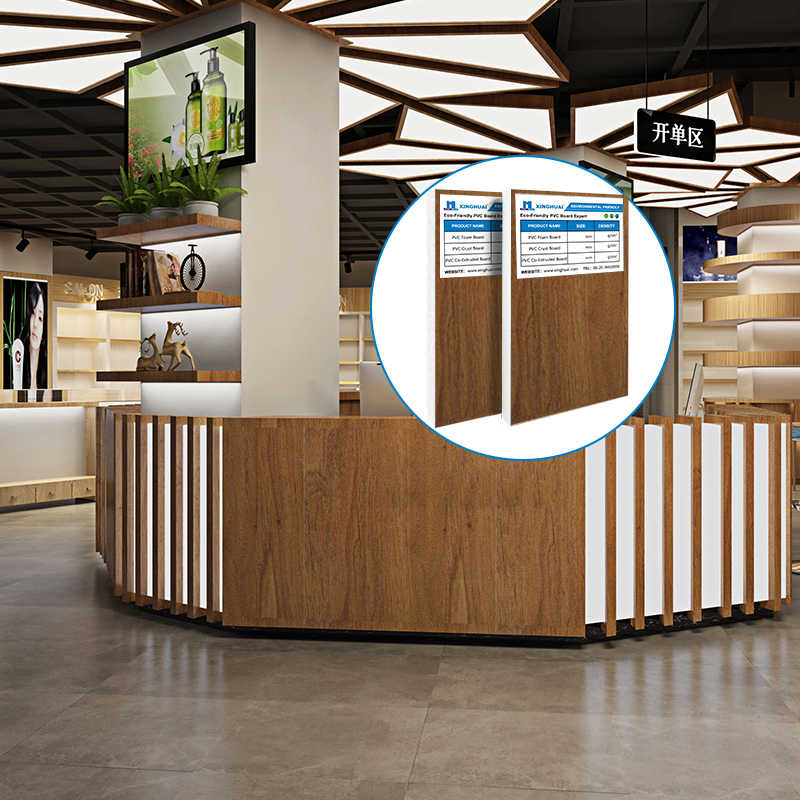
In construction, medium to high-density PVC foam boards are used for wall cladding, ceiling tiles, and partition walls. Their fire-retardant properties and ease of maintenance make them a popular choice in commercial buildings,hard pvc board hospitals, and schools. Additionally, hard pvc board these boards can be molded into intricate designs, adding aesthetic value to interior spaces.Furniture and Cabinetry (High Density)
High-density PVC foam boards, often referred to as hard PVC board, hard pvc board are extensively used in furniture manufacturing. Their rigidity and durability make them suitable for cabinets, wardrobes, and kitchen countertops hard pvc board. These boards can be laminated with veneers or painted to mimic the appearance of wood, offering a cost-effective alternative to traditional materials.Packaging and Protective Casing (Low Density)
Expandable PVC, with its low density, is widely used in packaging solutions for fragile items. Its shock-absorbing properties protect electronics, glassware, and other delicate products during transportation. Additionally, its lightweight nature reduces shipping costs, hard pvc board making it an economical choice for e-commerce businesses.
Conclusion
The usual density range of PVC foam boards spans from 0.4 g/cm³ to 0.65 g/cm³,hard pvc board catering to a diverse array of applications across industries. Whether it's the lightweight flexibility of expandable PVC for packaging, the balanced properties of standard PVC foam boards for advertising, or the rigidity of hard PVC board for furniture, density plays a pivotal role in defining the suitability of these materials for specific purposes. By understanding the relationship between density and performance, manufacturers and end-users can make informed decisions, ensuring optimal results in their projects. As technology advances, the development of new PVC foam board variants with tailored densities will continue to expand their applications, solidifying their position as a versatile and indispensable material in the modern world.